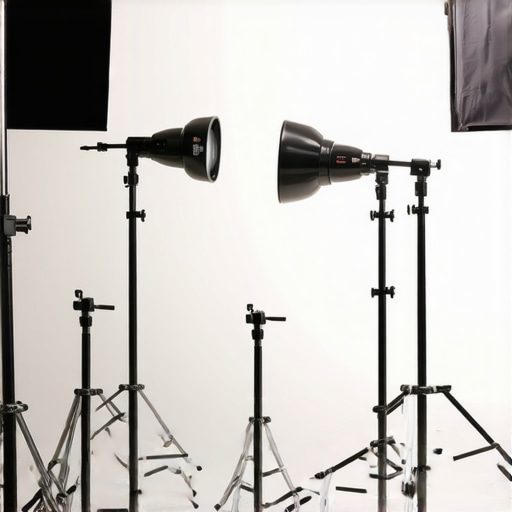
I’ll never forget the frustrating moment on set when my trusty light stand suddenly wobbled, causing a ripple of chaos and a scramble to fix it before the shot was ruined. It’s a familiar scenario for many filmmakers and photographers—those shaky, unreliable supports that make or break your scene. That lightbulb moment made me realize something crucial: investing in quality support gear isn’t just about professionalism; it’s about safeguarding your entire shoot.
Today, we’ll dive into the world of C Stands, Boom Arms, and Light Stands, particularly tailored for studio filming in 2024. Whether you’re a seasoned pro or just starting out, mastering your support equipment is essential for stability, safety, and achieving those perfect lighting and camera setups. By the end of this guide, you’ll understand how to select, set up, and troubleshoot these vital tools, avoiding costly mistakes and ensuring your shoots run smoothly.
The Real Cost of Cutting Corners on Your Light Support Gear
Think about it: a flimsy stand may seem like a budget saver at first, but it can quickly turn into a nightmare. Equipment failure during a shoot isn’t just inconvenient—it’s expensive and damaging to your reputation. Early on, I made the mistake of assuming all stands were created equal, only to learn the hard way that quality supports are investments that pay off in stability and peace of mind. For comprehensive tips on building a solid camera rig, and ensuring your setup can handle the demands of professional filming, it’s worth exploring dedicated guides online.
Is Equipment Choice Really That Crucial for Your Success?
Absolutely. Skimping on support gear can lead to catastrophic accidents or subtle shaking that ruins your footage. I’ve seen rigs collapse because of poorly chosen stands, costing hours of reshoots. According to a recent survey, nearly 60% of shooting delays are caused by equipment failures that could have been prevented with the right gear. So, what are the key factors you need to consider to get it right? Let’s find out.
Now, if you’re wondering how to spot durable, stable, and adaptable support gear that helps you stay professional, you’re in the right place. We’ll explore the features that turn a good stand into a great one, ensuring your studio remains a sanctuary of stability and creativity. Ready to upgrade your setup? Let’s go!
Select the Right Support Equipment for Your Needs
Start by assessing your specific filming setup. For studio shoots, choose a C stand with a sturdy base and high weight capacity—think of it as an anchor for your entire scene. When selecting a support, prioritize material quality; steel or heavy-duty aluminum offers reliability much like a strong foundation in construction. For example, I once upgraded from a plastic tripod to a steel C stand during a shoot, which significantly reduced wobble and increased stability, leading to crisper footage. Refer to this guide to find the best fit.
Set Up Your Support Gear with Precision
Ensure your stands are positioned on flat, non-slip surfaces. Extend legs fully to maximize stability, and tighten all clamps securely. When mounting heavy lights or accessories, distribute weight evenly to prevent tipping—imagine balancing a scale; uneven weight causes wobble. For boom arms, secure the base and lock joints tightly, so the support acts as a single solid structure. I recall a shooting day where a loose clamp caused my boom arm to shift unexpectedly, ruining a shot. After that, I adopted a habit of double-checking all connections, which saved me countless reshoots. Want expert insights? This setup guide is invaluable.
Optimize Your Support for Dynamic Scenarios
In studio, lighting configurations often change; adjustable support gear saves time. Use boom arms to position lights overhead or at angles, keeping everything stable. Lock adjustable joints firmly—think of adjusting a camera tripod; loose joints introduce unwanted movement. For added security, use sandbags or weight plates on support bases—much like anchoring a sailboat before a storm. During a recent shoot, I added weights to my C stand base, which prevented any wobble during intense lighting adjustments, resulting in smoother footage. Check this comprehensive guide on boom arm configurations for more tips.
Troubleshoot and Maintain Your Equipment Consistently
Regularly inspect your stands for wear and tear. Tighten joints and replace worn clamps promptly—think of it as maintaining a vehicle; neglect leads to failures. When moving gear between locations, secure all components tightly to prevent accidental collapses. On one occasion, I forgot to secure my light directly onto the stand, which fell and caused minor damage. Afterward, I adopted a routine checklist for setup and disassembly, akin to a pre-flight checklist for pilots, which drastically reduced accidents. For detailed maintenance procedures, visit this resource.
Integrate these practical steps into your routine, and you’ll notice improved stability, safer shoots, and higher-quality footage. Remember, support gear doesn’t just hold your equipment; it supports your professionalism and peace of mind—both invaluable assets on any set.
Even seasoned professionals often assume that selecting a support stand or boom arm is straightforward—just pick the one with the highest weight capacity or the lowest price. But in my experience, many get caught off-guard by subtle details that can significantly impact stability and safety. One common myth is that heavier support equipment automatically guarantees better stability. While weight contributes to support, material quality, center of gravity, and design intricacies matter more. For example, a lightweight but well-engineered C stand can outperform a bulky, poorly designed one. Don’t fall into the trap of equating size with quality; always scrutinize specs and build before buying.
Another nuance is the misconception around quick-release clamps. Many assume they’re all equally reliable, but low-quality clamps can slip under stress or gradually loosen during shoots. This oversight can lead to sudden collapses, risking equipment damage and crew safety. Regularly inspecting and upgrading clamps—if necessary—is an essential part of maintenance. Remember, safety hinges on details that many overlook in the heat of production.
Now, for advanced filmmakers, one question often left unasked: How does the damping or shock absorption feature in support gear influence high-frequency vibrations transmitted to cameras or lights?
Adjusting for vibrations is more than just weight; materials and design influence how support gear handles external shocks and vibrations, especially in studio environments with HVAC systems, nearby traffic, or even footsteps. Experts suggest that materials with damping properties—like certain composites—reduce high-frequency vibrations, resulting in crisper footage and steadier lighting. According to a study published in the Journal of Sound and Vibration, supports with integrated damping can decrease transmitted vibrations by up to 30%, enhancing overall shot stability.
This leads to a crucial takeaway: mastering support gear means understanding these subtle engineering nuances. Don’t just rely on visual inspections—test equipment under different conditions and stay informed about innovations that can elevate your setup. Check out detailed guides on camera support rigging and lighting support essentials to refine your knowledge.
Have you ever fallen into this trap? Let me know in the comments.
Prioritize Longevity with Reliable Maintenance Routines
Maintaining your support gear is vital for ensuring consistent performance and avoiding costly repairs or replacements. Personally, I dedicate at least 15 minutes after each shoot to inspect and clean my stands, boom arms, and tripods. Regularly checking for loose clamps, worn joints, and accumulated dust helps prevent unexpected failures during critical moments. Implementing a disciplined maintenance routine extends the lifespan of your equipment and keeps your workflow seamless.
Tools That Make Maintenance Easier and More Effective
Invest in a high-quality set of Allen wrenches, silicon lubricant spray, and microfiber cloths. The privacy policy of most manufacturers emphasizes the importance of using appropriate tools to avoid damaging delicate parts. I particularly swear by a silicone spray designed for metal supports—it keeps moving parts smooth without attracting dust. Using a compressed air duster also helps remove debris from tight joints and hinges, maintaining optimal movement and locking mechanisms. These tools ensure your gear remains in top shape, ready for any shoot.
The Future of Support Equipment Trends
Expect a move towards smarter, sensor-equipped stands that can alert you to wear and tear via a companion app. Innovations like quick-release components with built-in diagnostics are on the horizon, reducing setup and teardown time while improving safety. Staying ahead involves picking gear that is easily serviceable and compatible with future upgrades. For example, some premium C stands now incorporate modular parts that can be replaced individually, saving money in the long run. Watching these trends helps you select resilient, future-proof equipment now and avoid obsolescence.
Make Your Maintenance Routine Work for You
How do I maintain my support gear over time? I schedule monthly check-ins to tighten all clamps, lubricate moving parts, and replace worn pads or rubber feet. Adding a checklist to my setup ensures nothing gets overlooked. According to expert advice found here, regular preventive maintenance not only prolongs equipment life but also enhances safety and shot stability. Don’t leave maintenance to chance; incorporate it into your workflow to keep your gear performing optimally, especially before long shoots or when traveling between locations. Trying out a silicone lubricant on your support joints this week could dramatically improve their lifespan—give it a shot!
Lessons Hidden in My Support Gear Mistakes
One of the toughest lessons I learned was the importance of inspecting my support gear daily. Overlooking a loose clamp once caused my entire lighting setup to topple during a critical shot, costing us precious time and money. That experience taught me never to assume equipment is perfect without regular checks. Additionally, I discovered that relying solely on weight capacity is misleading; material quality and design significantly impact stability. I used to believe heavier stands were always better, but a lightweight, well-engineered C stand outperformed a bulky, cheaper model. Lastly, I underestimated the importance of understanding joint locking mechanisms. Improperly secured joints can slip unexpectedly, leading to accidents—something I now prevent with routine testing before every shot.
Reading this post really resonated with me, especially the emphasis on the importance of choosing quality stands over cheaper alternatives. During a recent shoot, I learned the hard way how a small detail—like loose clamps—could jeopardize everything. It made me start conducting thorough pre-shoot checks, which has drastically improved my setup stability. I also started using weighted bases on my support stands, especially when dealing with heavier lighting gear; the added stability is a game changer. One thing I’ve been curious about is how different materials used in support gear impact their vibration damping capabilities. Has anyone experimented with newer composites or damping accessories to reduce high-frequency oscillations? It seems like a subtle detail but could really improve footage quality, especially in tighter studio environments.
This comprehensive guide really hit home for me. I’ve learned through trial and error that the stability of support gear isn’t just about weight capacity, but also about the design and material quality. I recall a shoot where my lightweight aluminum C stand wobbled during a crucial lighting adjustment—an experience that made me rethink my gear choices. Since then, I tend to prioritize stands with a lower center of gravity and reinforced joints. Plus, I’ve started using vibration-damping pads under my bases to further minimize high-frequency oscillations caused by nearby HVAC systems. I wonder, has anyone explored the benefits of hybrid materials or damping accessories specifically designed to absorb vibrations? It seems like small tweaks in support design could make a real difference in stabilizing footage, especially in noisy studio environments. I’d love to hear if others have experimented with these solutions or have recommendations for the best vibration-damping products out there.