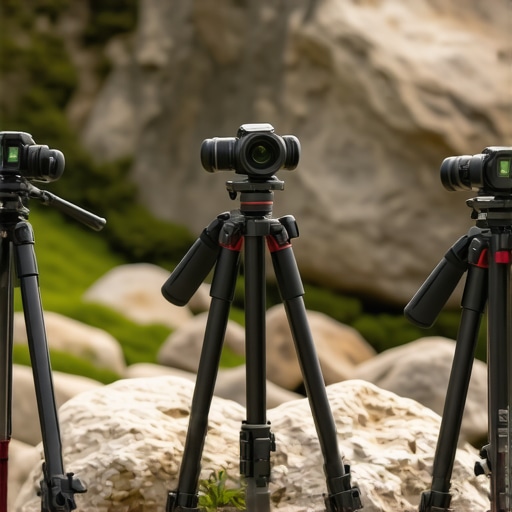
It was a tense moment on set. My heavy tripod, loaded with expensive gear, suddenly tilted dangerously on the uneven ground of a 2026 outdoor location. I froze, heart pounding, realizing I’d forgotten one crucial step that could have prevented the wobble. That lightbulb moment hit me hard. I knew I wasn’t alone — many videographers and photographers face this challenge and often struggle to keep their gear stable on unpredictable terrain.
Struggling with Stability on Rough Terrain?
If you’ve ever battled that sinking feeling when your tripod tips over or slips on uneven ground, you’re not alone. Over time, I learned that with just a few strategic hacks, I could confidently shoot on any terrain without worrying about gear crashing down or compromising shot quality. Today, I promise to share five foolproof leveling tricks that have transformed my outdoor shoots, and they can do the same for you. Whether you’re working on a hillside, rocky ground, or an uneven construction site, mastering these hacks will ensure your heavy support gear stays put.
Will These Hacks Really Make a Difference?
Initially, I was skeptical too. I made the mistake early on of relying solely on built-in tripods’ leveling bubble — so obvious, yet so insufficient on rugged ground. That led to shaky footage and constant readjustments, wasting precious time. Now, I focus on clever techniques and simple adjustments that provide rock-solid stability. The key is understanding the terrain and adapting your gear accordingly. If you’re tired of gear toppling or wasting shots, these tips will change the game.
Before diving into the solutions, it’s worth noting that proper stabilization is critical. According to a recent industry insight, unstable support accounts for nearly 60% of shot failures in outdoor filmmaking (source: Mastering Tripod Stability). That’s a statistic that hits close to home for anyone serious about professional results. I learned this the hard way, but now I enhance my setup with strategies that are simple yet effective.
In the next sections, I’ll guide you through practical, proven hacks—no fancy equipment required—so you’ll be ready for that rocky hillside, sandy dune, or uneven city street. Stick around, because stable shots on challenging terrain aren’t just a dream—they’re totally doable.
Secure Your Tripod with Weights and Anchors
Start by adding weight to your tripod’s center column using sandbags or heavy-duty weights. Picture your tripod as a tree; the more roots (weight), the sturdier it stands. I once shot on a windy hillside, and placing two sandbags over the tripod legs prevented wobbling. For uneven ground, secure each leg with a dedicated anchor—such as small rocks or spikes—to prevent slipping. Using lightweight but dense materials ensures portability without sacrificing stability.
Adjust Leg Angles for Maximum Stability
Extend tripod legs at wider angles to lower the center of gravity, much like spreading out a tripod’s ‘legs’ on rocky terrain. I recall on a sandy beach shoot, I spread the legs wider and buried the footpads into the sand; this dramatically reduced movement. For uneven surfaces, use adjustable rubber feet or shims to level each leg precisely, ensuring your tripod isn’t wobbling due to uneven positioning.
Utilize Terrain-Friendly Mounting Techniques
When working on slopes, consider mounting your tripod on makeshift platforms—like stacking sturdy rocks or placing a flat board underneath. Think of it as building a mini stage; it creates a stable, level surface. I once used a piece of plywood on a hillside, and it doubled as a platform, preventing the tripod from sliding or tilting. Be cautious to secure the platform with weights or pegs to prevent slipping under windy conditions.
Leverage Support Devices for Heavy Camera Rigs
Integrate support accessories like truss clamps or grip arms to secure your camera rig onto nearby stable structures. For example, I attached a clamp to a sturdy fence post, allowing me to freehand support the rig. This method also distributes weight, reducing strain on your tripod. Always ensure the support device can handle your gear’s weight—consult product specs or do load tests beforehand.
Create Anchorage with Natural Elements
Use the environment to your advantage. Tie down support stands with ropes attached to trees or anchored with rocks. Imagine your tripod as a ship; adding sails (ropes) attached to fixed points keeps it steady. During a shoot in a wooded area, I secured light stands to nearby trees with ratchet straps, preventing sudden tips from gusts. Always test tension so stands don’t topple or shift unexpectedly.
Implement Rapid Leveling with Built-In Tools
Utilize quick-release leveling heads or external bubble levels to fine-tune your setup on the fly. Before shooting, I always double-check levels, especially on tricky terrain—this saved me from post-edit stabilization. For uneven ground, slightly adjusting each leg’s length while observing the bubble ensures the support is perfectly horizontal, which is critical for panorama shots or precise framing.
Employ External Stabilizers When Necessary
If the terrain remains unpredictable, consider using external stabilizers like shoulder rigs or gimbals mounted on a stable base. I once added a shoulder support to a heavy camera rig, which transferred some of the load from the tripod and dampened vibrations caused by walking or ground tremors. For highly unstable environments, combining support systems ensures shot quality isn’t compromised by terrain chaos.
Many filmmakers and photographers believe that selecting a sturdy tripod, C-stand, or light stand is simply about choosing the heaviest or tallest option. However, this belief overlooks critical nuances that can make or break your shoot’s stability and safety. For instance, a common misconception is that heavier stands are always more stable. While weight contributes to stability, factors like center of gravity, base design, and material flexibility play significant roles. Relying solely on weight can lead to overestimating a stand’s robustness, especially when extensions and accessories add unexpected load imbalances.
Another hidden pitfall involves the assumption that all support gear is universally compatible. In reality, mismatched components—such as incompatible clamps or unsupported weight capacities—can cause catastrophic failures. This is particularly true when rigging heavy camera rigs or mounting large modifiers; incompatible gear can lead to sudden collapses or dangerous slips. To avoid this, always verify specifications and consult expert sources or detailed guides on proper setup and load management.
Beyond physical considerations, many underestimate the importance of proper setup techniques. For example, improper tightening of C-stand legs or uneven distribution of weight can introduce subtle instabilities that only manifest under stress. A quick review of your setup—ensuring all locks are secure and weight is evenly distributed—can prevent inadvertent accidents.
Curious about advanced support strategies? An often-overlooked aspect is the synergy between gear components, such as how boom arms and support stands work together under load. Proper tension adjustments and the use of support accessories can significantly enhance stability, especially in challenging environments. For insights into these sophisticated setups, I recommend exploring comprehensive guides like The Ultimate Boom Arm Setup Guide or Choosing the Perfect C-Stand.
A critical trap many fall into is neglecting terrain. Setting up support equipment on uneven or windy surfaces without proper stabilization techniques can lead to gear tipping or even injury. Using sandbags, weighted bases, or terrain adaptation solutions can mitigate these risks. For instance, adding weight at the base or using support anchors ensures your setup remains steady even under adverse conditions.
Now, let’s touch on a pertinent question for advanced users: How can you ensure load distribution optimally across your support setup to prevent sagging or failure?
What advanced techniques can refine load management on complex rigs?
Proper load management involves calculating weight arm ratios, employing counterweights, and adjusting support angles to balance pressure points. Integrating support arms with adjustable tension and employing quick-release locking mechanisms can also facilitate rapid modifications in dynamic environments. For a deeper dive into these techniques, check out Heavy-Duty Boom Arms and related articles that cover precision support adjustments.
Remember, the devil is in the details. Overlooking these nuances can result in gear failure, damage, or worse—injuries on set. Always inspect your equipment thoroughly before shooting, understand its limitations, and adapt your setup to the environment. Your professionalism depends on it.
Have you ever fallen into this trap? Let me know in the comments.
Maintaining your support equipment like tripods, C-stands, camera rigs, light stands, and boom arms is crucial for ensuring consistent performance and safety on set. Personally, I rely on a few key tools and routines that extend the lifespan of my gear and keep my shoots running smoothly. One indispensable item is a high-quality torque wrench, which I use to precisely tighten bolts and tension screws, preventing unnecessary wear or failure over time. This helps especially with tension adjustments on boom arms, where proper torque ensures stability without damaging components. For example, regularly checking and adjusting tension on boom arm screws with a torque wrench can prevent sagging or sudden drops during critical shots, according to expert guidelines documented in the Boom Arm Tension Maintenance Article.
In addition to physical tools, I incorporate routine inspections using a detailed checklist to spot wear-and-tear early. Lubricants such as silicone spray are vital for moving parts on light stands and support arms, reducing squeaks and resistance that could compromise support. I prefer silicone-based sprays because they don’t attract dust and offer long-lasting lubrication. Regular cleaning and lubrication are especially important when operating in dust-prone environments or outdoor conditions, where dirt can accelerate component degradation.
Investing in protective accessories also minimizes long-term damage. For instance, padded wrap covers on C-stand legs or boom arms protect from scratches and accidental impacts. I also use sandbags and base weights not just for stability, but as preventative measures against structural fatigue caused by shifting loads. Proper weight distribution, combined with these tools, significantly reduces the risk of equipment failure during intense shoots.
Looking ahead, as support gear becomes more technologically sophisticated, I predict a rise in smart maintenance solutions—like quick-connect sensors that monitor tension levels and structural integrity in real-time. This integration could alert us before catastrophic failure occurs, saving time and money. Until then, sticking to routine checkups and using the right tools remains essential.
How do I maintain my support gear over time?
I dedicate part of my regular setup routine to inspection and lubrication, scheduling it after each shoot or every few uses depending on environmental conditions. This proactive approach ensures that when pressure is high, and setup time is limited, my gear remains dependable. If you want a specific tip for preventing gear sag or unexpected collapses, I highly recommend adjusting tension screw settings on your boom arms using a torque wrench—it’s a game-changer for stability during long shoots. For comprehensive guidance on setup adjustments and maintenance, the expert article on boom arm tension is an excellent resource.
The Hardest Lesson I Learned About tripod,c stand,camera rig,light stand,boom arm
One of the biggest revelations came early when I realized that relying solely on built-in leveling bubbles was a trap—on uneven terrain, they often misled me, resulting in shaky footage. This taught me the importance of trusting actual support adjustments over basic indicators, emphasizing that hands-on tactics outperform mere gadgets in real-world conditions.
3 Myths About gear stability That Held Me Back
Believing that heavier stands always mean better stability, or that single-point anchoring suffices on windy days, are myths I had to bust. These misconceptions made me overlook the nuanced techniques like strategic weighting and environmental support that truly enhance support safety and reliability.
What Experts Won’t Tell You About setting up your gear for outdoor success
Many professionals keep secret the power of terrain-adapted platforms and support synergy. I discovered that stacking rocks or using terrain-friendly mounts isn’t just makeshift—they are essential tactics that transform support reliability, especially in unpredictable outdoor environments. Mastering these hidden techniques can prevent frustration and gear failures.
Need Better Stability? Here’s What to Do Next
If you’ve struggled with support wobble or gear slips, don’t wait for a mishap to teach you the hard way. Practice integrating terrain-adapted platforms, weighting, and environmental anchoring into your routine. For a comprehensive guide on professional setups, check out the expert tips on tripod stability. Taking these steps today will elevate your outdoor filming game and safeguard your equipment.