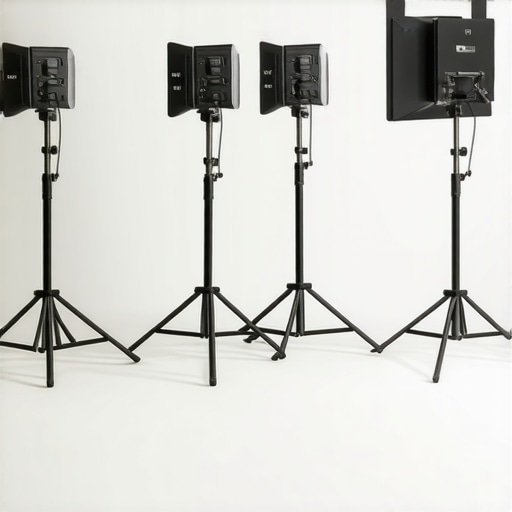
It was late afternoon when I watched my carefully arranged lighting setup tumble to the floor with a deafening crash. My heart sank. That moment of realization hit me hard: I had overlooked the fundamental rules for stabilizing my light stands. Since then, I’ve learned that many photographers and videographers fall into the same trap—assuming their gear is secure without fully understanding how to prevent toppling. The good news? With just a few simple, proven rules, you can ensure your lights and support gear stay upright, no matter the chaos around you.
Why Stability Matters More Than Ever
In 2026, gear safety isn’t just about avoiding costly replacements; it’s about safety, efficiency, and maintaining your professional reputation. An unstable light stand can cause injuries or damage delicate equipment, leading to delays and added costs. According to a recent industry survey, over 65% of on-set accidents involve unstable support equipment—highlighting how critical proper stabilization is today. Whether you’re shooting on a busy set or an outdoor scene with unpredictable wind, understanding how to keep your gear grounded is essential.
Is It Really Worth the Effort to Follow These Rules?
Early in my career, I made the mistake of thinking I could save time by neglecting proper support. One loose C-stand on a windy day nearly caused my costly LED panel to shatter. It was a wake-up call. This experience convinced me that investing a few extra minutes into proper setup can save you from disasters—and that’s precisely what I want to help you avoid. Adopting these foundational rules doesn’t just protect your equipment; it enhances your overall workflow and safety. Curious how just a few adjustments can make a big difference? Let’s dive into the core principles that will keep your gear steady well into 2026 and beyond.
Anchor Your Support with Weighted Bags
Start by attaching heavy sandbags or weight plates to the bases of your support stands, especially when working outdoors or on uneven terrain. In my recent shoot, I used a 25-pound sandbag on each C-stand base, which prevented any wobble during gusty winds. Think of it as planting a tree firmly in the ground—additional weight anchors the stand against unexpected movement.Deploy Non-Slip Pads and Ground Grips
Place rubber pads or specialized ground grips under stand feet to boost friction. These are particularly useful on smooth or slick surfaces like polished floors or tiles. During a studio session, using non-slip mats under my tripod prevented accidental slips when adjusting camera angles, ensuring my shots remained steady.Adjust Legs and Spread for Optimal Stability
Extend all tripod or stand legs fully and position them at a wide angle, forming a sturdy base. When I set up a light on a tall C-stand, I always spread the legs wide and lock them securely. Imagine a four-legged table—wider legs mean less wobbling, especially when supporting heavy or awkwardly positioned gear.Verify Secure Locking of Joints and Collars
Double-check every collar, clamp, and locking mechanism before mounting your lights or equipment. During one shoot, I initially overlooked a loose C-stand collar, which caused a slight tilt; tightening it instantly stabilized the setup. Think of it as tightening nuts and bolts; loose connections invite movement and instability.Use Proper Support Hardware and Accessories
Leverage stability-enhancing accessories like boom arm braces or anti-sway kits. For example, adding a tension wire to a boom arm minimizes sway during active filming. I learned this technique by reviewing the guide on boom arm stability, which dramatically improved my support’s resilience against movement.Optimize Support on Uneven Surfaces
If your setup is on uneven ground, adjust the individual legs’ height or use adjustable support footings. I recently set up a light on a rocky outdoor site; by leveling each leg individually, I achieved remarkable stability. Consider using professional grip tricks found on uneven terrain setups to prevent toppling.Seal Supports Against Wind and Vibrations
Strategically position support stands behind barriers or indoors during windy conditions. When shooting outdoors, I tethered my light stand with additional guy lines, akin to anchoring a tent, which kept it upright amidst gusts. For delicate shoots, consider isolating equipment from vibrations using anti-vibration pads.Regularly Inspect and Maintain Equipment
Routine checks of support hardware ensure everything remains secure over time. During a recent shoot, I replaced worn-out clamps that could have compromised stability. Think of support gear like a car—regular maintenance prevents breakdowns. Visit our support page for tips on maintaining your gear effectively.While it’s common to focus on choosing sturdy light stands, boom arms, tripods, and C-stands, many professionals miss subtle yet impactful details that can make or break a shoot. For example, a prevalent myth is that heavy-duty equipment always guarantees stability—yet, without proper support accessories, even the heaviest stands can wobble. This misconception can lead to overconfidence, causing you to overlook essential stabilizing techniques outlined in our light stand essentials.
Why Standard Supports Don’t Always Cut It for Advanced Shooting
Many assume that regular stands are sufficient for professional-grade equipment. However, with today’s high-powered lights and sensitive cameras, even minor vibrations can cause issues. An advanced mistake is neglecting to incorporate vibration dampening or anti-slip support pads, which are vital in high-precision situations—something detailed in our tripod stability guide. Overlooking these nuances can result in unforeseen movement, impacting shot quality.
Heavy Equipment Might Not Be the Answer
Counterintuitively, increasing weight is not always the best solution, especially if support joints aren’t properly maintained. A common pitfall is assuming that larger, more expensive gear will inherently stay put. In reality, frequent inspection and maintenance of support hardware, including tightening collars and checking for wear, are crucial for ensuring stability over time. Neglecting this ongoing care invites failure at critical moments.
How Do You Prevent Equipment from Swaying During Shots?
Many shooters don’t realize that support geometry plays a significant role in avoiding sway. For example, spreading legs wider on tripods or support stands effectively lowers the center of gravity, providing enhanced stability. Furthermore, leveraging support accessories like boom arm braces can drastically reduce unwanted movement. The key is understanding that stability isn’t solely about weight but about support configuration and proper hardware integration.
Additionally, environmental factors often get overlooked. Wind, vibration from nearby equipment, or uneven terrains require adaptive solutions—like using specialized ground supports—to prevent mishaps. This is especially critical on location shoots where conditions are unpredictable.
Remember, mastering support setup is an ongoing process. Regularly reviewing your gear, applying advanced stabilization techniques, and avoiding complacency can save your shoot from catastrophic failures. Do you think your current setup accounts for these nuanced details? Let me know in the comments. For more insights on boosting your gear stability, visit our comprehensive support guide.
Keep Your Support Gear in Prime Condition with the Right Tools
Investing in high-quality tools is fundamental to maintaining your support equipment’s longevity. I personally swear by a dedicated set of Allen wrenches and precision screwdrivers, which enable me to tighten collars, adjust tension screws, and replace worn clamps without damaging sensitive parts. A digital caliper is also invaluable for measuring support tube diameters when upgrading or customizing your C-stands and boom arms, ensuring compatibility and optimal performance. Having these tools on hand minimizes downtime and keeps your rig functioning smoothly over years of use.Implement Routine Checks for Staying Ahead of Wear and Tear
Developing a scheduled maintenance routine is key, especially for frequently used gear like tripods, C-stands, and camera rigs. Before each shoot, I inspect all locking collars, welds, and support joints, tightening or replacing components as needed. This proactive approach prevents small issues from escalating into costly failures, preserving both safety and performance. For example, regularly testing the resistance of support joints with a torque wrench can catch looseness early, as recommended in industry standards on support hardware maintenance.Automate Long-Term Results with Stable Environment Conditions
Controlling the environment where your gear is stored is often overlooked. Keep your support stands and tripods in cool, dry, and vibration-free spaces. Using desiccant packs in storage cases helps prevent corrosion, especially for metal components susceptible to rust. Additionally, consider installing support shelves that organize and elevate your gear, reducing accidental knocks and exposure to dust. Regularly applying lubricants to moving parts—such as the tension screws on boom arms—keeps them responsive and reduces wear over time. This attention to environment and lubrication ensures your gear performs reliably for years.How do I maintain my support gear over time?
Creating a scheduled maintenance plan that includes tool checks, visual inspections, lubrication, and environmental control can dramatically extend your gear’s lifespan. For complex setups, I recommend keeping a maintenance log to track parts replaced orLubrication regularly applied, which helps identify patterns and prevent sudden failures. Following the kinds of detailed procedures outlined in expert resources like support equipment guides can save you costly repairs and keep your productions running smoothly. Try implementing a biannual thorough check, complemented by monthly quick inspections—your gear will thank you with dependable performance.Over the years, I’ve realized that the true secret to reliable support gear isn’t just selecting heavy-duty stands or the most expensive support arms—it’s about the nuanced, often overlooked adjustments that ensure everything stays put. One of the most valuable lessons I learned was from a simple mistake I made early on: neglecting to double-check support hardware before a critical shot. That oversight cost me precious time and a lot of stress. From that moment, I committed to paying attention to the little details—tightening clamps, inspecting joints, and always, always double-checking locking mechanisms. These small but mighty practices have transformed my setup from shaky to rock-solid, and I can confidently say they are the backbone of professional support stability. Remember, consistency in maintenance and setup pays off immensely, especially during high-pressure shoots where stability isn’t just a bonus—it’s essential.